
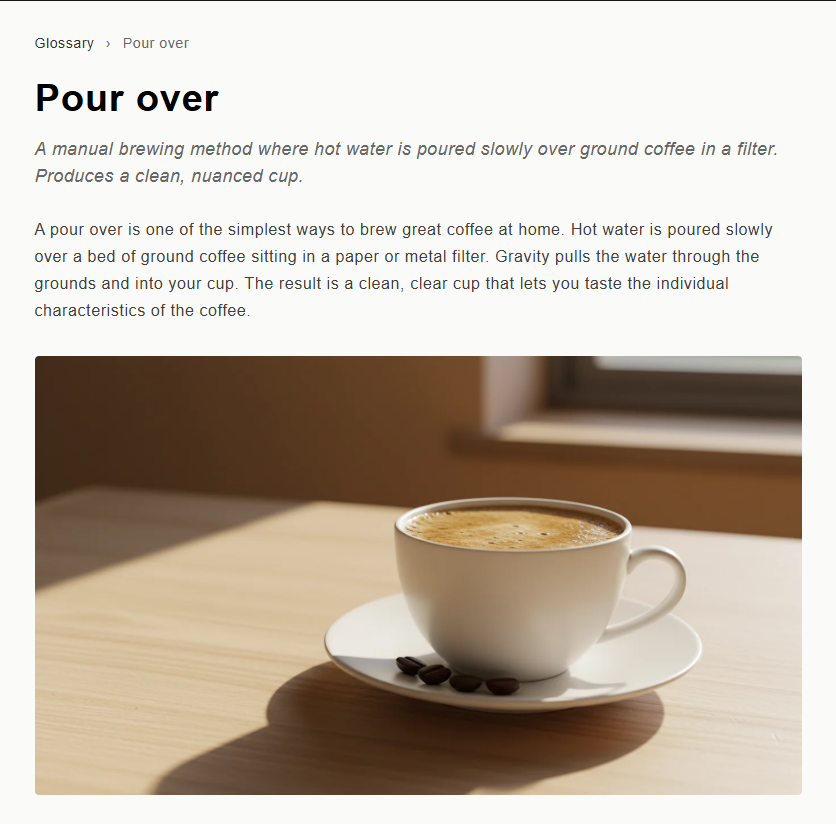
 In this guide, we will break down the essential elements of a high-converting ecommerce glossary term page. We will look at how to structure the content, what to include to build buyer confidence, and how to connect definitions directly to your product catalog.
The core structure of an ecommerce glossary term page
A successful ecommerce glossary term page should answer the shopper’s immediate question quickly, then provide deeper context for those who want it. Think of it as a specialized landing page that educates and guides the user toward a relevant product. Here is the ideal structure to follow.1. The short answer (TL;DR)
Start with a single, clear sentence that defines the term in plain language. Avoid using other complex industry terms in the definition. If a shopper only reads this one sentence, they should walk away understanding what the word means. This short description is also perfect for use in tooltips across your store, giving users immediate context without forcing them to leave the product page.2. The detailed definition and why it matters
After the short answer, expand on the concept. Explain how the term applies specifically to the products you sell. Why should the buyer care about this feature, ingredient, or material? For example, if you are defining “mercerized cotton,” explain that it makes shirts softer, stronger, and less likely to shrink, rather than just describing the chemical process. Connecting the definition to a tangible benefit is what turns a curious reader into a confident buyer.3. Real-world examples
Concrete examples help solidify abstract concepts. If you are defining a technical specification like “IP68 waterproof rating,” give an example of what that means in practice: “You can drop this phone in a pool, but you shouldn’t take it deep-sea diving.” If you sell coffee and are defining “single origin,” mention specific regions like Ethiopia or Colombia to ground the concept in reality.4. Related products
The ultimate goal of an ecommerce glossary term page is to help the customer find the right item. Always include a section that links to products in your catalog that feature the term you just defined. If a shopper is reading about “salicylic acid,” show them your best serums containing that ingredient. This creates a seamless path from education to purchase.5. Related terms and internal links
Help shoppers navigate your catalog by linking to related glossary entries. If someone is reading about “French press,” they might also want to know about “coarse grind” or “immersion brewing.” Good internal linking keeps visitors on your site longer and helps search engines understand the structure of your content. You can read more about how to choose your first glossary terms to start building these connections.6. Expert notes or buying advice
Adding a small section with expert advice or a “pro tip” establishes your brand’s authority. For instance, on a page defining “Gore-Tex,” an expert note might advise buyers on how to wash the fabric to maintain its waterproofing. This extra layer of helpfulness shows that you understand the product beyond just selling it.Weak vs. strong glossary pages
To see the difference in action, let’s compare two approaches to defining “Polarized Lenses.” A weak term page might just say: “Polarized lenses are coated with a special chemical film that reduces glare from reflected light.” This is accurate, but it reads like a dictionary. It doesn’t help the buyer choose a pair of sunglasses or understand when they might need them. A strong ecommerce glossary term page would start with that definition, but then add practical context: “Why it matters: Polarized lenses reduce eye strain and improve visibility, making them ideal for driving, fishing, and skiing. They are not recommended for viewing LCD screens, like airplane dashboards.” It would then show examples of polarized sunglasses from the store’s catalog and link to related terms like “UV protection.”Building better pages with SuperGlossary
Creating these detailed pages manually for hundreds of terms can be time-consuming. That is where a dedicated tool helps. SuperGlossary allows you to build rich term content with dedicated term pages, short descriptions for tooltips, and custom SEO title and meta fields. You can easily link terms to specific products and manage your entire vocabulary in one place. By structuring your definitions thoughtfully, you turn a basic dictionary into a powerful sales tool. Start upgrading your definitions today and watch your buyer confidence grow. If you are unsure where to begin, check out our guide on comparing glossaries to FAQs to see how different content formats serve different buyer needs.Shopify App
Ready to turn your store's terminology into an SEO asset? Try Super Glossary for Shopify to automatically link technical terms and add helpful tooltips to your product pages today.
4 thoughts on “The anatomy of a useful ecommerce glossary term page”